Friends · · 3 min read
Protecting the Natural Character of Scenic 30A
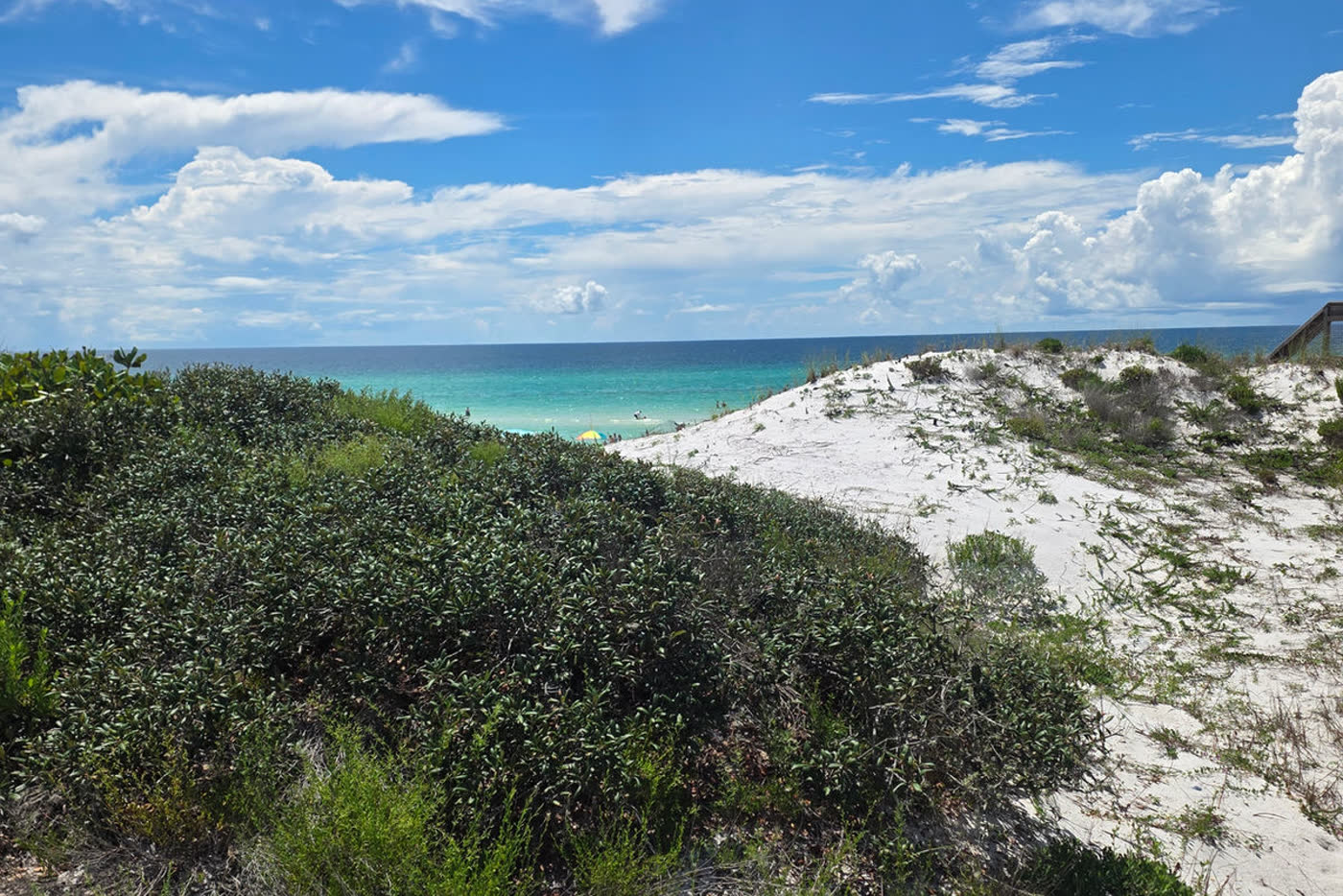
The natural landscape surrounding Scenic Highway 30A is one of the defining features of the corridor.
Long before many of today's homes, businesses and communities existed, this landscape was shaped by coastal dune lakes, pine forests, wetlands, dunes and native vegetation adapted to Northwest Florida's coastal environment.
Protecting those resources has been a central part of Friends of Scenic 30A's mission from the beginning.
Native Vegetation Matters
Native vegetation does much more than make the corridor attractive.
It helps define the visual character of Scenic 30A while supporting wildlife habitat and an ecosystem uniquely adapted to local soil, weather and coastal conditions.
That is why Friends' historical Action Plan called for continued enforcement of native vegetation preservation requirements and encouraged the development of landscaping standards for the Scenic 30A corridor.
Friends also encouraged education about native vegetation and responsible landscaping practices.
Preservation works best when people understand not only what is being protected, but why it matters.
Protecting Heritage Trees and Scenic Character
Friends has also historically supported protection of heritage trees and thoughtful landscaping along the corridor.
The organization's Action Plan called for working with Walton County on heritage tree preservation and landscaping standards, as well as screening utilities and other infrastructure where appropriate.
Those details matter.
The scenic character of a roadway can gradually disappear through hundreds of seemingly small decisions—removing mature trees, replacing native landscapes, adding unnecessary signage or allowing infrastructure to dominate the visual environment.
Preserving a scenic corridor therefore requires attention to the entire landscape.
Our Coastal Dune Lakes
Among Scenic 30A's most recognizable natural resources are its coastal dune lakes.
These lakes are a defining feature of the South Walton coastline and have long been highlighted in Friends' educational materials as resources worthy of protection and appreciation.
They are also a reminder of how closely interconnected the corridor's natural systems are.
What happens around a lake—development, landscaping, drainage, public use and infrastructure—can ultimately affect the resource itself.
Protecting these lakes requires stewardship extending beyond the water's edge.
State Lands and Trails
The character of Scenic 30A also benefits enormously from the public and conservation lands surrounding it.
State parks, Point Washington State Forest and an extensive network of trails preserve large areas of natural landscape while giving residents and visitors opportunities to experience them.
These lands are part of what makes traveling Scenic 30A different from traveling a typical coastal highway.
At various points, a person can move from a vibrant town center into forest, dune, lake or state park within minutes.
That contrast is worth preserving.
Preservation Requires Participation
Government regulations alone cannot protect everything that makes Scenic 30A special.
Property owners, businesses, visitors, community organizations and government all play a role.
Friends' historical Action Plan recognized this by calling for collaboration with homeowners associations, businesses, landowners, government officials and other organizations, as well as continued public education and participation.
That approach remains relevant today.
Protecting What Makes 30A Different
Growth and change are inevitable.
Losing the natural character that distinguishes Scenic 30A is not.
Friends of Scenic 30A works to ensure that native landscapes, coastal dune lakes, forests, parks, trails and other natural resources remain part of the corridor's future.
Because the goal isn't simply to preserve individual pieces of the landscape.
It's to preserve the relationship between the road, the communities and the natural environment that makes Scenic 30A unlike anywhere else.